



Chinese Shipyard Berth Capacity: What Really Sets Your 2026 Delivery Slot
-
 2026-11-11
-
 2
An aerial view of a large yard with several hulls in parallel dry docks suggests a simple equation: more docks, more ships, earlier delivery. In practice, Chinese shipyard berth capacity is only one of six constraints that decide a newbuild delivery slot, and it is rarely the binding one. The date in your contract is set by the slowest link in a chain that runs from steel intake to the trials window — and the chain is only as strong as the yard's production planning.
For owners placing mid-size newbuild orders in 2026, understanding that chain is worth more than any headline capacity figure. This article sets out how delivery slots are actually built, why series construction compresses them, and what to verify on a yard visit.
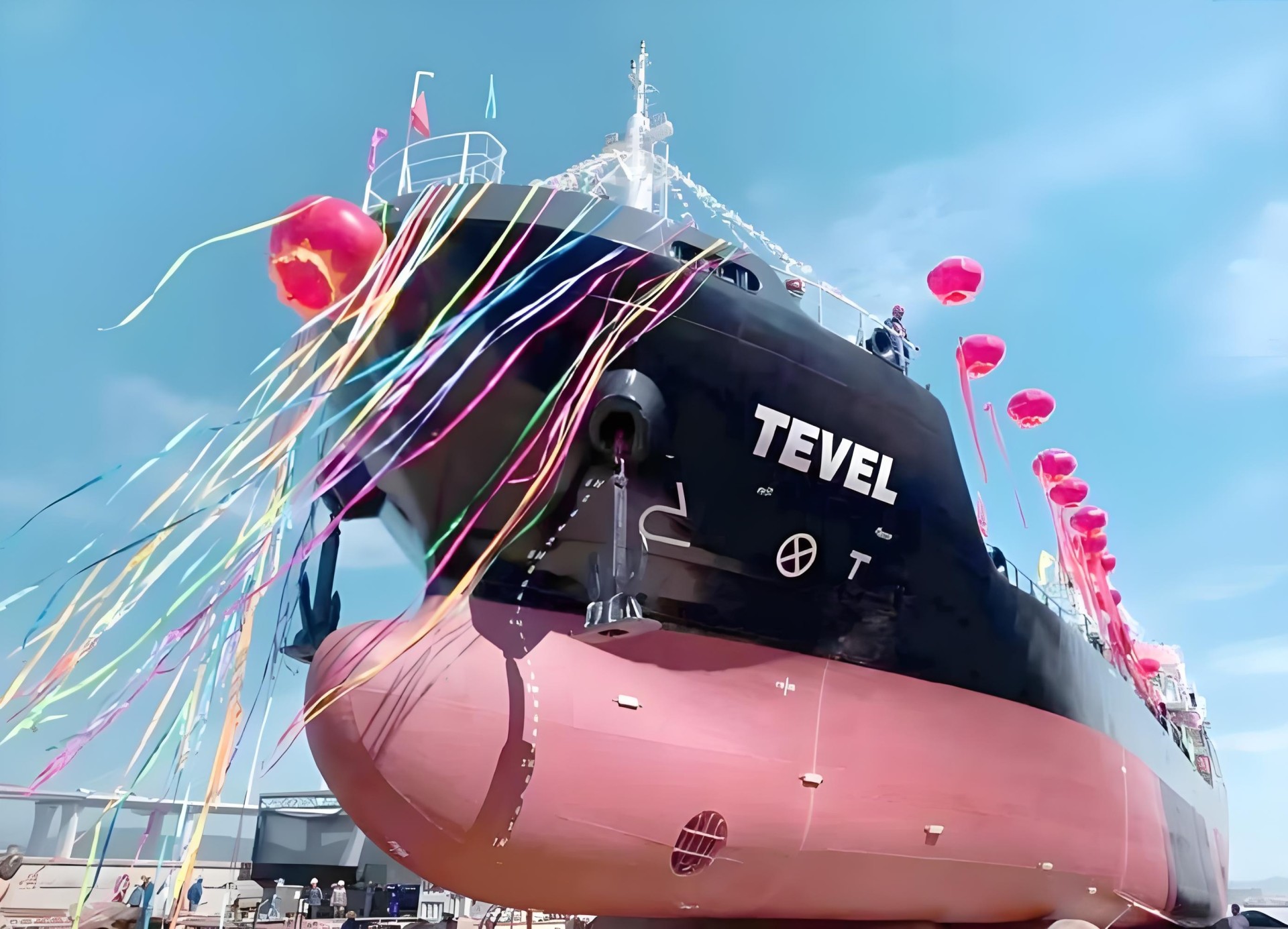
(Industry reference image. The photograph shows a large state-owned Chinese shipyard and is not the Taizhou Changlong facility.)
1. Why dock count is a poor proxy for capacity
A dock is a place to join blocks. It is not a measure of how many blocks a yard can produce. The constraints that actually govern the schedule are these:
Steel throughput. Plate intake, cutting, forming and sub-assembly capacity set the rate at which work can begin. A yard with idle dock space but a saturated cutting shop will still deliver late.
Block assembly area and crane coverage. Large blocks need laydown space and lifting capacity. Where either is short, blocks queue and dock erection becomes a sequence of waiting.
Outfitting quay length. Most schedule slippage on mid-size vessels occurs after launching, during outfitting, commissioning and dock trials. Quay metres are often scarcer than dock metres.
Long-lead equipment. Main engines, gearboxes, shaft generators, switchboards, treatment units and special-grade steel carry their own lead times. A slot is only real if the order commitments behind it are real.
Skilled labour stability. Welder and fitter turnover drives rework. A stable workforce produces more predictable dimensional control and fewer survey repeats.
Trials and class windows. Sea trials, surveyor availability and weather slots close the schedule. They are easy to overlook at signing and impossible to compress at the end.
A buyer who asks only "how many docks do you have?" has not yet asked a useful question. The useful question is: show me the production plan for my hull against the other hulls in the same period.
2. How a series build compresses the schedule
The clearest advantage visible in any multi-dock yard is repetition. Where a yard builds a series of sister ships, drawings are already approved, welding procedures are qualified, jigs and fixtures exist, class has reviewed the package once, and the project team has met the failure modes before. The second hull is faster than the first; the fourth is faster than the second.
For a private yard, series construction is equally valuable at smaller scale. Two to six handysize or supramax hulls built to a common specification allow the yard to hold steel, reserve long-lead items in a single procurement run and keep one project team on the programme. The owner benefits twice: a shorter, firmer delivery window, and a vessel whose documentation and build history are consistent across the series.
There is also an honest segmentation point. The largest state-owned Chinese yards are optimised for very large hulls and long production runs; their berths are committed years ahead. A private Zhejiang yard such as Taizhou Changlong Shipbuilding Industry Co., Ltd. works in a different range — bulk carriers, container ships, fishing vessels and engineering vessels in the mid-size bracket — where flexibility, short engineering lines and direct access to the production team are the competitive advantages. Owners should choose against their own hull size, not against a brochure photograph of the largest dock in the country.
3. What to verify on a yard visit
A serious due-diligence visit takes one or two days, and it should end with documents rather than impressions.
The dock and quay schedule for the 24 months covering your proposed build, with the other hulls named by size and delivery window.
The current order book, including which class societies are involved and which owners have site teams on site.
The variation log from a recent project. It is among the most honest documents a yard can share: it shows how quickly technical questions were answered and how much of the final sum was added after signing.
Procurement commitments for long-lead items on comparable hulls, with dates rather than assurances.
Quality evidence retrievability — weld procedure specifications, welder qualifications, material certificates and non-destructive testing records tied to a specific plate and joint.
Project team continuity. Confirm that the project manager stays with the hull from contract to delivery.
Our shipyard due-diligence guide covers the commercial side of this assessment; the production questions above are the ones that determine whether the promised slot survives contact with the shop floor.
4. Quick reference: from signing to delivery
| Stage | Typical window (mid-size newbuild) | What can delay it |
|---|---|---|
| Specification and class approval | Months 0–3 | Late owner changes, unclear machinery envelope |
| Steel ordering and cutting | Months 2–6 | Plate supply, steel-price adjustment disputes |
| Block assembly and dock erection | Months 5–14 | Laydown space, crane coverage, welder availability |
| Launch / undocking | Months 12–16 | Dock schedule conflict, outfitting readiness |
| Outfitting, commissioning, dock trials | Months 14–21 | Long-lead equipment, quay congestion |
| Sea trials, class close-out, handover | Months 20–24 | Weather, surveyor windows, punch-list close-out |
Indicative only. A clean, owner-approved specification and a firm machinery order are the two most effective ways to keep a 2026 delivery slot intact.
5. Three practical conclusions
First, treat the delivery date as a production-plan claim that needs evidence, not as a contractual promise that will enforce itself. Second, favour a yard whose order book is disciplined rather than simply full — an overbooked yard is a schedule risk regardless of its dock count. Third, write specification freeze dates and variation pricing into the contract, because late changes remain the single largest cause of delay on mid-size newbuilds.
Frequently asked questions
How far ahead are Chinese shipyard berth slots committed in 2026?
At busy yards, 12–18 months is common, and the largest facilities are committed further out. For a handysize or supramax newbuild at a well-run private yard, owners signing in 2026 typically plan for delivery in 16–24 months.
Does a bigger shipyard always deliver faster?
No. Dock count measures erection space, not steel throughput, block assembly area, outfitting quay capacity or long-lead equipment availability. The binding constraint is usually one of those, and it differs by yard.
Why do series builds shorten delivery times?
Approved drawings, qualified welding procedures, existing jigs, familiar class interfaces and a single procurement run remove repeated approval and learning cycles. Each sister hull typically builds faster than the one before it.
What is the most common cause of a slipped delivery slot?
Late specification changes after steel has been cut, followed by long-lead equipment arriving after the hull is ready. Both are largely avoidable with a frozen specification and early purchase orders.
Ask to see the production plan
Chinese shipyard berth capacity is best judged from the production plan, not from the number of docks in an aerial photograph. A delivery slot is a schedule, and a schedule is only as credible as the plan behind it. Taizhou Changlong Shipbuilding Industry Co., Ltd. welcomes technical visits at its Wenling, Zhejiang yard, where owners can walk the quay, review the current build programme and discuss a hull-by-hull timeline directly with the engineering and production teams. If you are planning a 2027 delivery, start the conversation before the slot, not after it.
ADDRESS
浙江省台州市温岭市松门镇天玺中心 / Tianxi Center, Songmen Town, Wenling City, Taizhou, Zhejiang Province, China
taosan171@gmail.com
PHONE
+86 13736657777 / +86 13676683567


关注微信公众号
