



Geared vs Gearless: Let Your Ports Decide the 2026 Bulk Carrier Newbuild Spec
-
 2026-11-11
-
 3
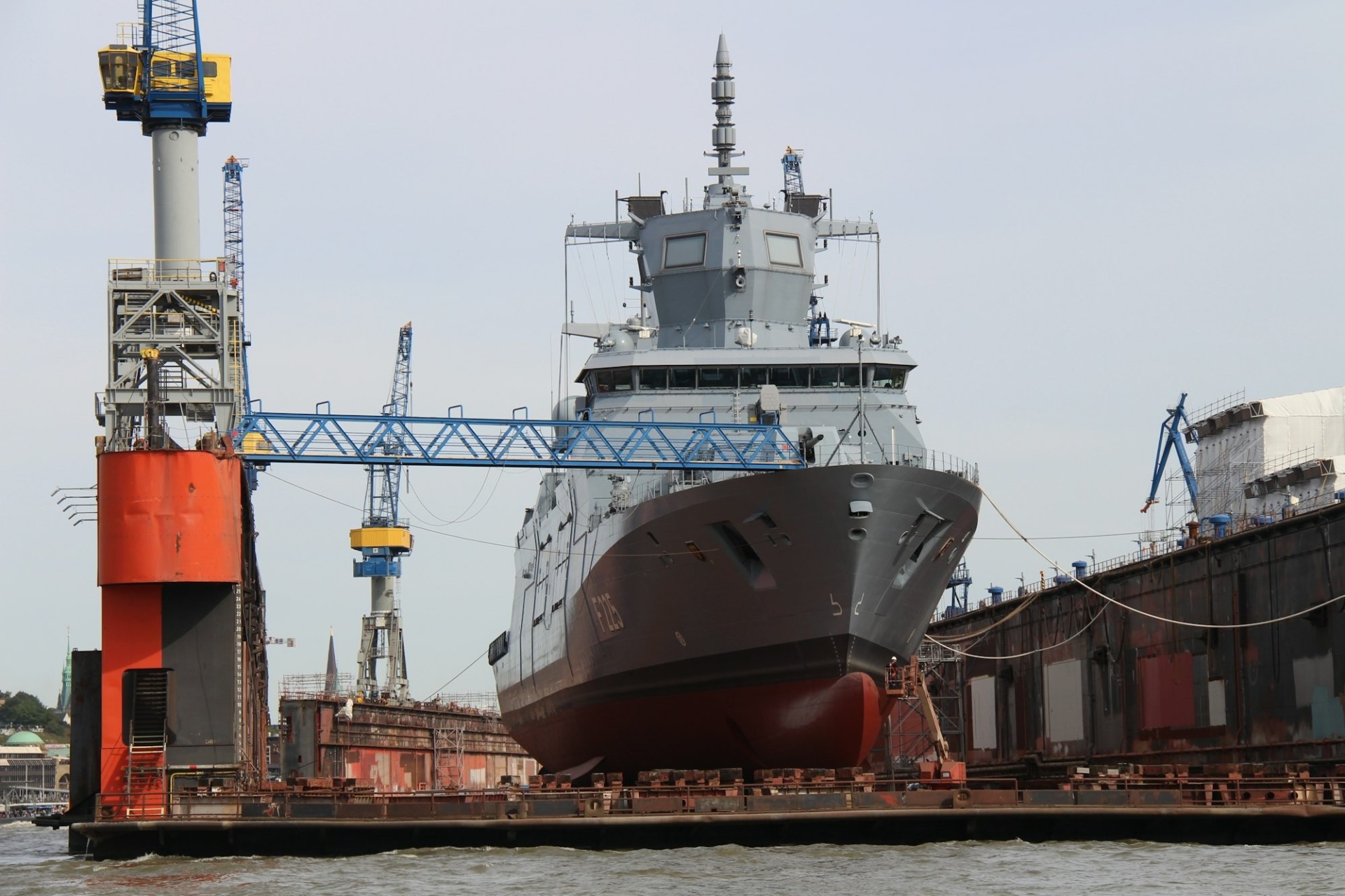
The photograph above shows a bulk carrier alongside a regional berth with two cargo-handling systems in the same frame: shipboard deck cranes on the vessel and shore gantry cranes behind it. That overlap is the whole decision in one picture. For an owner specifying a geared bulk carrier newbuild in 2026, the right answer is not a matter of fashion or of what the previous fleet happened to carry. It is a matter of the ports the ship will actually call at, the cargoes it will actually lift, and what the crane package costs over a 20-year life.
This guide sets out a port-first method for settling the question, the cost and schedule arithmetic behind it, and the specification details that are expensive to change once steel has been cut.
(Industry reference image. The vessel shown is not a Changlong build.)
1. What deck gear actually buys you
A geared vessel can work cargo where the shore has nothing to offer, or where the available cranes are too small, too slow or committed to another berth. On minor bulk trades — grains, fertilisers, bagged cargo, steel products, project cargoes — that independence translates into a wider choice of ports and less exposure to berth waiting time. It is one reason handysize and supramax tonnage has remained the flexible end of the dry bulk market.
The independence has a price. Deck cranes add capital cost, add weight high in the ship, impose structural reinforcement at the crane pedestals, complicate hatch cover arrangements, and bring a permanent maintenance and survey obligation: wires, sheaves, brakes, hydraulics, slew bearings, spares and crew competence. They also affect stability and windage, and their foundations must be integrated into the hull structure at the design stage rather than bolted on later.
A gearless vessel is a simpler asset. It is lighter, cheaper to maintain and usually better suited to high-volume routes served by modern shore loaders. The trade-off is total dependence on the port's equipment. If that equipment is unavailable, the ship waits.
2. Start with a port list, not a crane catalogue
A disciplined specification process begins with the 15–20 ports that will generate most of the vessel's calls over its first five years. For each, record:
Berth draft and LOA restrictions, including any tidal window.
Shore crane safe working load and outreach, and whether the crane can reach the far side of each hatch.
Typical berth waiting time and the number of available crane units.
Cargo mix and parcel size, including whether grabs, magnets or specialised spreads will be used.
Hatch coaming height and shore equipment clearance.
Any local requirement for shipboard gear, which still exists at a number of smaller regional terminals.
If the list is dominated by ports with reliable shore equipment, gearless is usually the rational choice. If three or four regular calls have no dependable shore cranes, a geared bulk carrier newbuild earns its keep. Mixed lists are common, and they are where a custom specification — for example four 30-tonne cranes with grab capability, or a reduced gear package on selected holds — is worth discussing with the yard before drawings are frozen.
3. The cost arithmetic owners tend to under-count
Our 2026 bulk carrier newbuild buyer's guide puts a typical geared crane package on a handysize or supramax vessel in the USD 1.5–3 million range at contract stage. That is the visible number. The fuller calculation includes:
Capital and structural cost — cranes, pedestals, reinforcement, hydraulic and electrical integration.
Deadweight and stability effect — high-weight equipment reduces the cargo margin on some drafts.
Operating cost — routine maintenance, wire and brake replacement, periodic load testing and class survey of lifting appliances.
Off-hire exposure — a crane failure at a port without shore equipment can stop cargo work entirely.
Resale and charter flexibility — geared tonnage addresses a broader set of trades, but a gearless hull on a high-volume route may fix more readily with a lower daily cost.
The correct comparison is not "cranes versus no cranes". It is the expected value of port access over the vessel's life versus the whole-life cost of carrying the equipment.
4. When gearless clearly wins
Three patterns consistently favour gearless tonnage: long-term contracts on a fixed port pair with dedicated loaders; trades where cargo volume makes shore equipment faster than any shipboard crane; and owners optimising for the lowest possible maintenance burden across a large series. In these cases the capital saved is better spent on hull form, a lower-consumption main engine or an emissions package that protects the vessel's CII rating.
Conversely, owners trading opportunistically across secondary ports, or carrying project cargo into terminals with limited infrastructure, usually recover the gear premium through flexibility. Neither answer is universally right — which is precisely why the specification should be written against a real trading pattern.
5. Quick reference: geared vs gearless in 2026
| Decision factor | Geared bulk carrier newbuild | Gearless bulk carrier newbuild |
|---|---|---|
| Port access | Independent of shore equipment | Limited to equipped terminals |
| Contract price | Higher (cranes, foundations, integration) | Lower, simpler structure |
| Maintenance | Lifting-appliance surveys, spares, crew skills | Minimal cargo-system upkeep |
| Deadweight / stability | High weight and windage penalty | More cargo margin at a given draft |
| Typical fit | Handysize / supramax, minor bulk, secondary ports | Fixed rotations, high-volume terminals |
| Resale | Broader trade eligibility | Narrower but cheaper to operate |
6. Five questions to put to the yard
Can the crane foundations and hatch cover layout be revised before steel cutting without a schedule penalty?
Which class society will certify the lifting appliances, and what documentation is delivered at handover?
What is the guaranteed crane cycle rate with the intended grab, and at what outreach?
Where are the crane spares and the load-test records held for the warranty period?
If the owner later changes trading pattern, what retrofit work would a gearless-to-geared conversion require?
A yard that answers those questions in writing is usually a yard that has built the vessel before.
Frequently asked questions
How much does deck gear add to a bulk carrier newbuild in China in 2026?
A typical four-crane package on a handysize or supramax hull adds roughly USD 1.5–3 million at contract stage, before whole-life maintenance and survey costs. The exact figure depends on safe working load, outreach, grab specification and class requirements.
Do geared bulk carriers still make sense with modern port equipment?
Yes. A geared bulk carrier newbuild earns its keep on trades that regularly call at ports without dependable shore cranes. Gear is insurance against berth limitations, and its value depends entirely on the intended port list rather than on market fashion.
Can cranes be added after delivery?
Technically possible, but rarely economical. Crane pedestals, hull reinforcement, hydraulic routing, electrical capacity and stability documentation all have to be designed in from the start. Decide at specification stage.
Which size segment most often orders a geared bulk carrier newbuild?
Handysize (28,000–40,000 DWT) and supramax (50,000–65,000 DWT) vessels on regional and minor-bulk trades. Larger panamax tonnage more often relies on shore-based loaders.
Build the specification around the cargo, not the catalogue
The vessel in the photograph carries its own cranes because someone, at some point, decided those ports needed them. That is the only test that matters. Taizhou Changlong Shipbuilding Industry Co., Ltd. builds bulk carriers and other working vessels at its private yard in Wenling, Zhejiang, and works directly with owners on crane fit, hatch layout and cargo-system detail before drawings are frozen. Send your intended port list and cargo mix for a hull-by-hull specification review.
ADDRESS
浙江省台州市温岭市松门镇天玺中心 / Tianxi Center, Songmen Town, Wenling City, Taizhou, Zhejiang Province, China
taosan171@gmail.com
PHONE
+86 13736657777 / +86 13676683567


关注微信公众号
