



Fishing Vessel Modernization and Quota Compliance: How Chinese Private Yards Are Reshaping the Distant-Water Fleet
-
 2026-10-08
 -
 1
1
Meta description: Chinese fishing vessel builders are quietly modernizing the distant-water fleet. Here is how private yards deliver compliant, fuel-efficient trawlers and longliners in 2026.
Why the world's fishing fleets are being rebuilt in China
The global fishing fleet is being asked to do something difficult at the same time. It has to catch more protein for a growing population, do it with less fuel, do it under tighter quota rules, and do it with crews that are increasingly hard to find. The vessels doing that work are being designed and built in a smaller number of yards each year, and Chinese private shipbuilders have become the dominant supplier of modern fishing vessels for export.
This article is a practical guide for operators, flag administrations and fishing-vessel owners who are considering a fishing vessel newbuild from China or a deep fishing vessel modernization in 2026. It covers the segments that matter, the rules that drive the specification, and the questions buyers should ask a Chinese fishing vessel shipyard before signing a contract.
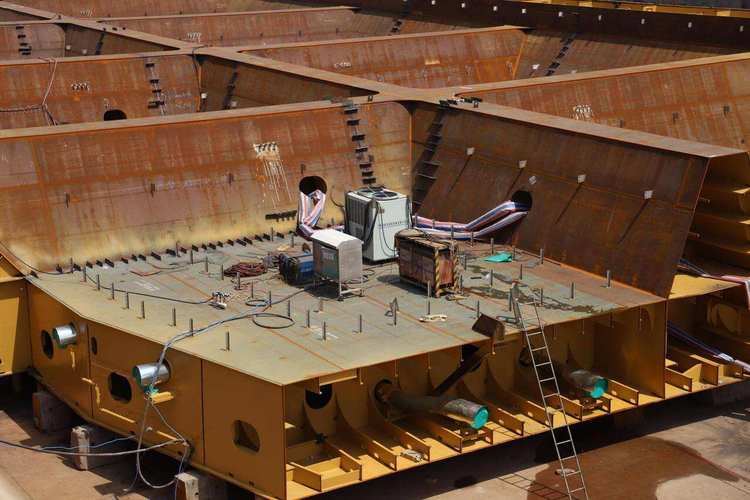
1. Which fishing vessel segment fits your operation?
A fishing vessel builder in China typically works across four segments. Each has its own hull form, machinery envelope and rule framework.
Coastal fishing vessels (under 24 m). Small trawlers, gillnetters, longliners and purse seiners working inside the 12-mile or 200-mile zone of the flag state. A coastal fishing vessel newbuild from China in 2026 is usually FRP- or steel-hulled, with a single main engine, basic refrigeration and accommodation for a small crew.
Offshore fishing vessels (24–45 m). The workhorse of national fleets. Trawlers, purse seiners and squid jiggers that stay at sea for one to three weeks. An offshore fishing vessel newbuild from a Chinese private yard typically carries a larger engine room, a brine or RSW cooling system, and enough accommodation for 20–35 crew.
Distant-water fishing vessels (45 m+). Tuna longliners, large purse seiners, factory trawlers operating across oceans under RFMO quotas. A distant-water fishing vessel newbuild from China is the most complex segment. Freezer plants, automated handling gear, longer endurance, and full compliance with flag and port-state rules are baseline.
Aquaculture and inland support vessels. Live-fish carriers, fish-farm feed barges, well-boats and small transport hulls. Less headline-grabbing than distant-water trawlers, but a steady order book at the right yards.
Each segment demands a different builder. A yard that excels at a 35-metre offshore trawler is not necessarily the right builder for a 70-metre tuna longliner. The rest of this guide focuses on offshore and distant-water segments, where Chinese private yards are most active internationally.
2. The 2026 rule landscape that drives every fishing vessel newbuild
A fishing vessel newbuild from China is shaped as much by regulation as by the operator's brief. Four rule sets dominate the 2026 specification.
RFMO quota and bycatch rules. Regional fisheries management organisations — ICCAT, IOTC, WCPFC, CCAMLR, NAFO, NEAFC and others — set total allowable catch, bycatch limits, gear restrictions and observer-coverage rules that flow directly into vessel design. A tuna longliner ordered in 2026 must carry bird-bycatch mitigation gear, hook-swivels configured for circle-hook compliance, and line-cutter placements that match RFMO expectations.
Flag-state technical rules. Major fishing flags (China, the EU, Japan, Korea, Russia, the United States, Taiwan, Chile, Peru and others) maintain their own construction rules. A Chinese fishing vessel newbuild intended for export is usually built to the rule of the buying flag, with class oversight from a recognised society such as RINA, Lloyd's Register, Bureau Veritas, DNV or ClassNK.
EEXI and CII ratings. The IMO energy-efficiency rules that apply to merchant vessels are gradually reaching fishing tonnage. Newbuilds ordered in 2026 are increasingly specified with hybrid-ready engine rooms, shaft generators and waste-heat recovery systems that keep the vessel within CII band B or C for the first decade of its life.
Manning and welfare standards. Modern tuna longliners and factory trawlers carry crews of 30–60 for trips of two to six months. ILO Work in Fishing Convention (C188) requirements, flag-state manning rules and welfare expectations from buyers in Europe, North America and Japan have raised the bar on accommodation, mess facilities, medical spaces and crew recreation areas. A fishing vessel newbuild from China in 2026 is expected to meet these standards as a baseline, not as an upgrade.
A yard that knows these rules is worth more than a yard that quotes the lowest steel price. A rule mistake on a fishing vessel becomes expensive quickly — port-state control detentions, RFMO observer reports, and buyer-side audits all carry consequences.
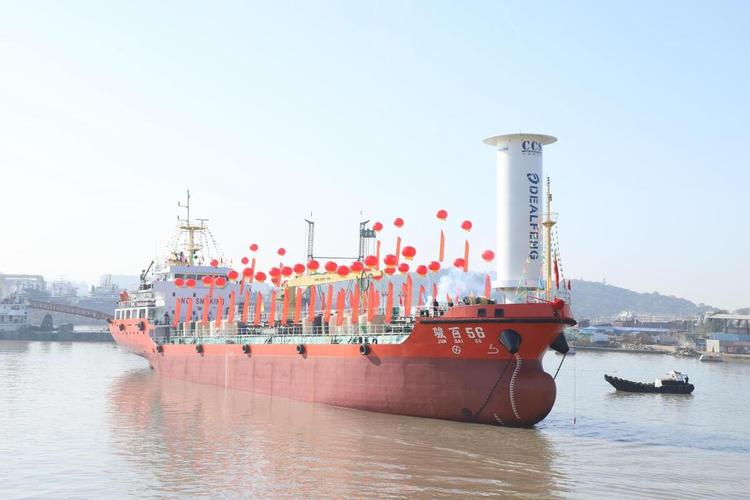
3. What an owner gets from a serious Chinese fishing vessel shipyard
A fishing vessel shipyard in China that works on offshore and distant-water tonnage in 2026 typically offers a full-package build: hull, engine room, refrigeration plant, deck machinery, accommodation and class certification. Three capabilities separate a serious yard from a basic one.
Integrated fishroom and refrigeration design. A modern offshore or distant-water fishing vessel newbuild from China is built around the catch-handling system. RSW (refrigerated seawater) cooling, brine tanks, blast freezers, plate freezers and automated handling gear must be designed in parallel with the hull form and engine room. A yard that controls this integration under one roof delivers a tighter, more reliable vessel.
Energy-efficient hull and propulsion. The fuel bill on a distant-water fishing vessel often exceeds the steel cost over the vessel's life. A modern fishing vessel newbuild from China should offer a hull form tuned for the operating profile — typically 12–14 knots cruising with burst speeds for sets and hauling — and a propulsion package with waste-heat recovery or hybrid-ready shaft generators.
Crew welfare as a deliverable. A fishing vessel that keeps its crew healthy, rested and properly fed is a fishing vessel that catches more fish and has fewer incidents. Modern Chinese fishing vessel newbuilds deliver noise-insulated accommodation, proper mess and recreation spaces, gym or exercise areas, and medical facilities configured for the flag-state manning rules. This is not luxury; it is an operational requirement at sea for months at a time.
4. Newbuild or modernization? The 2026 calculation
A newbuild is not the only answer. Many operators in 2026 are looking seriously at fishing vessel modernization — a mid-life refit that extends service life, modernizes the engine room, installs refrigeration upgrades, and brings the vessel to current rule standards.
A serious fishing vessel modernization program at a Chinese yard typically covers:
Main engine and generator replacement or rebuilding.
Refrigeration plant replacement (RSW or brine system upgrades).
Deck machinery overhaul or replacement (winches, net drums, line haulers).
Accommodation block refurbishment.
Hull blasting, coating renewal and rudder/propeller upgrades.
Safety equipment upgrade to current flag and RFMO rules.
The economic case for modernization is strongest when the hull is sound, the vessel is under 20 years old, and the operator's route profile does not need a longer or wider vessel. The case for a newbuild is strongest when the existing vessel is approaching the end of its class cycle, when emissions rules would require an expensive retrofit anyway, and when the operator's trading pattern has changed.
A fishing vessel builder in China that offers both newbuild and modernization is in the best position to give an operator an honest answer. Ask the yard which option it recommends for your vessel, and why.
5. How to choose a fishing vessel shipyard in China
The fishing vessel builder landscape in China is broad. The right yard for a tuna longliner is rarely the right yard for a coastal trawler, and the difference between bidders shows up in process discipline, not in brochures. The following checklist mirrors what serious operators run through before signing.
Order book. What fishing vessel newbuilds are on the floor right now, for whom, and to which class? A yard building a repeat series for established fishing operators has already had its drawings, procedures and work packages tested by that owner's team.
Rule knowledge. Which flags, RFMO requirements and class rules has the yard actually delivered against? A reference list with operator contact details is worth more than a marketing deck.
Refrigeration and catch handling. Walk the yard and ask to see the fishroom and refrigeration fit-out of a vessel in build. The integration of hull, insulation, plant and pipework is the difference between a fishing vessel and a steel box with a wheelhouse.
Crew accommodation standards. Visit a completed vessel in service. Talk to the master and chief engineer if possible. Comfort, noise levels, ventilation and mess facilities translate directly into crew retention and operational reliability.
After-sales and class-renewal support. A fishing vessel in 2026 will spend its life going through regular class renewals, RFMO observer audits and port-state inspections. The yard that supports its own newbuildings through their service life is also building the knowledge base that makes those renewals shorter and cheaper.
A useful last test is the variation log from a recent fishing vessel newbuild. How quickly were technical questions answered? Were cost and schedule impacts stated up front? How much of the final contract sum was added after signing?
6. Why private Chinese yards are leading fishing vessel modernization in 2026
The largest state-owned yards in China are excellent at the largest hulls and the most complex naval and offshore projects. For fishing vessel newbuilds and fishing vessel modernization in the 24–80 m range, a private yard with the right equipment, the right classification relationships and the right production discipline is often the more practical answer.
Taizhou Changlong Shipbuilding Industry Co., Ltd. — a private yard in Wenling, Zhejiang — builds fishing vessels, bulk carriers, container ships and engineering vessels as part of a deliberately diversified portfolio. For operators evaluating a fishing vessel newbuild from China or a serious fishing vessel modernization programme in 2026, the yard works directly with owners, flag administrations and classification societies, and is open for yard visits by technical teams.
Quick reference: fishing vessel newbuild and modernization in 2026
Segment | Typical LOA | Typical crew | Rule framework |
Coastal fishing vessel newbuild | <24 m | 4–10 | Flag-state only |
Offshore fishing vessel newbuild | 24–45 m | 15–35 | Flag-state + IMO EEXI/CII where in scope |
Distant-water fishing vessel newbuild | 45–80 m | 30–60 | Flag + RFMO + EEXI/CII + ILO C188 |
Fishing vessel modernization | Any LOA | Existing | Class renewal + flag + RFMO where triggered |
A mid-life modernization typically delivers 8–12 additional years of service when the hull is sound and the rule framework is addressed.
Plan a visit, not just a quote
A fishing vessel is the artefact, but the engineering relationship behind it is the real product. Taizhou Changlong Shipbuilding Industry Co., Ltd. welcomes technical visits and commercial discussions for fishing vessel newbuild and fishing vessel modernization projects in 2026 and beyond.
Contact Information
Company: Taizhou Changlong Shipbuilding Industry Co., Ltd.
Address: Tianxi Center, Songmen Town, Wenling City, Taizhou, Zhejiang Province, China
中文地址: 浙江省台州市温岭市松门镇天玺中心
E-mail: taosan171@gmail.com
Phone: +86 13736657777 / +86 13676683567


关注微信公众号
